
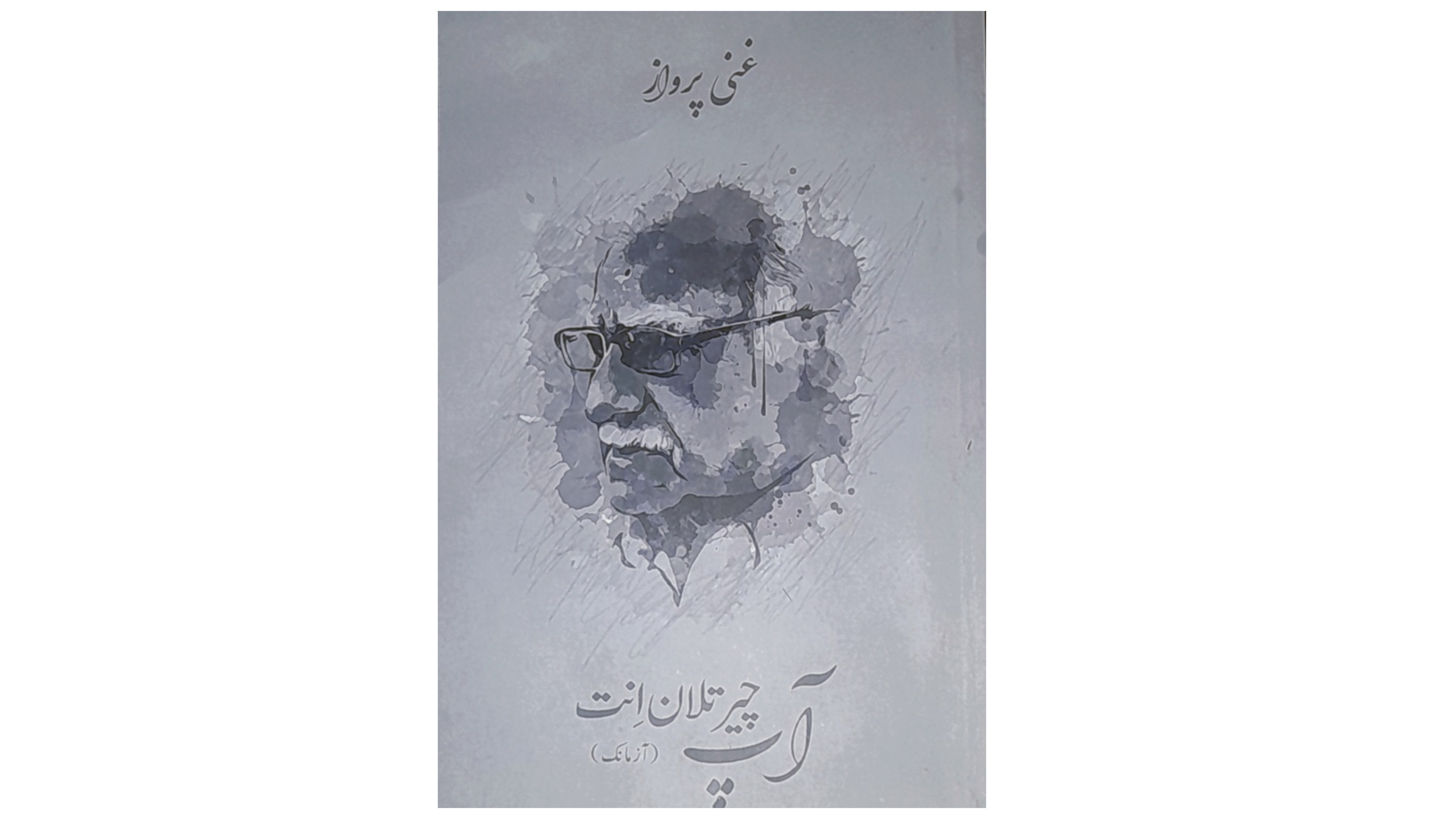
Writer: Ghani Parwaz
Sections: 37
Pages: 93
Published: 1999
AUTHOR’S DESCRIPTION
Ghani Parwaz, a renowned and profound man of letters, was born in the house of Haji Muhammad Ibrahim in Nizarabad, Tump, District Kech, Balochistan. His remarkable literary career began in 1971 with the writing of short stories. He has authored numerous books, 40 of which have been published to date. He is the founding president of two organizations: Labzanki Karwan and the Balochistan Academy. He has received regional, provincial, and national awards for his contributions to literature. He is also a well-known human rights activist who raises his voice for oppressed people. In short, Ghani Parwaz is a charismatic and committed nationalist author, poet, novelist, and fiction writer.
INTRODUCTION
Àp Chér Talán Int is an insightful, thought-provoking, and enlightening collection of short stories published by Ghani Parwaz in 1999. It consists of 37 sections and 93 pages. These captivating stories explore the governing system, the plight and tragedy of Balochistan, love, and art. They depict the struggles of an oppressed people while highlighting the enduring power of love and art. In short, this collection of short stories captures the reader’s attention through its compelling themes and thought-provoking narratives.
SUMMARY
The book Àp Chér Talán Int is a profound collection of engaging and thought-provoking short stories. The author portrays a brutal ruling system, the oppression of Balochistan, and the triumphant power of love. The stories explore how rulers—whether of nations, empires, countries, or tribes—continue to suppress public freedom. To protect their regimes, they seize control of people’s lives, silencing, torturing, imprisoning, and even killing those who challenge their authority. In some cases, the mutilated bodies of victims are dumped in desolate places. Under such oppressive systems, public freedom becomes virtually nonexistent.
Furthermore, the collection poignantly conveys the tragedy of Balochistan, an affluent region rich in mineral resources. Although it is a land of extraordinary beauty and natural wealth, it has been turned into a living hell by oppression and brutality. Its beauty has faded under the cruelty of occupiers and colonizers. The people are constantly surrounded by sorrow, pain, agony, massacres, and barbarism. Conscious individuals who speak out against injustice are labeled mentally ill or terrorists, while others are killed for resisting oppression.
The book also illustrates that love is not a curse but a blessing. Although the world possesses weapons, power, and authority, none of these can ultimately defeat the power of love. In one of the stories, love proves to be timeless and eternal, triumphing over cruel force and oppression.
THEMES
1. Exploitation of Freedom
Freedom is the bright light that illuminates a dark world. It is an open sky that allows everyone to fly freely and fills living beings with a renewed spirit. However, this collection depicts how those who stand for justice are punished under oppressive systems. For instance, a Qazi (judge) is imprisoned for upholding justice, while citizens are killed for raising their voices in defense of their rights.
The monarch and his minister are consumed by personal gain, acting as masters of life and death while depriving oppressed people of their identity, dignity, and freedom. Through these stories, the author exposes the cruelty of rulers who prioritize their power and interests over justice and human rights.
2. The Balochistan Tragedy
The book vividly illustrates the plight and fate of the beloved homeland, Balochistan. In one allegorical story about art, Balochistan is portrayed as a political figure stabbed through the heart with a knife, symbolizing the denial of not only its right to liberty but also its right to life.
Similarly, another story depicts Balochistan as a land as rich in gold and silver as a paradise, yet trapped in a living hell. Despite its abundant natural resources and remarkable beauty, the region continues to suffer from oppression, cruelty, and massacres. Through these powerful images, the author highlights the tragic contrast between Balochistan’s natural wealth and the suffering of its people.
3. The Power of Love
Love is one of the purest, most serene, and most powerful human emotions. Despite the existence of thousands of languages, it remains difficult to describe fully in words. Love can transform the world into a garden filled with blooming flowers, but its absence can turn it into a barren and infertile land.
As the book portrays, love is a natural feeling that arises spontaneously; it is not a sin. The author emphasizes that love cannot be controlled by force or authority. Similarly, the story of Hani and Sheh Mureed illustrates that Chakar possessed power, wealth, and authority, yet he failed to overcome Sheh Mureed, whose only possession was his pure and sincere love for Hani. This story demonstrates that genuine love can triumph over worldly power and material possessions.
RELEVANCE TO SOCIETY
By exploring the brutality of the governing system and the tragedies endured by the people of Balochistan, the book demonstrates how rulers and political leaders silence and subjugate citizens to preserve their regimes and maintain their power. Similar concerns arise in Pakistan, often referred to as the “land of the pure,” where people seeking justice may be silenced or subjected to severe consequences.
The situation in Balochistan is particularly heartbreaking, as the people continue to experience grief, suffering, and loss. Political activists, students, and educated individuals in the region have faced allegations of enforced disappearance, abduction, and extrajudicial killing. The discovery of bodies in remote and desolate areas has further intensified public grief and concerns about human rights. Such incidents are often associated with demands for justice, freedom, and fundamental rights.
In this context, individuals who become conscious of their rights and speak out against injustice are sometimes portrayed as terrorists, rebels, or mentally unstable. These practices reflect the broader concerns about freedom of expression, human dignity, and the protection of fundamental rights.
However, silencing, abducting, torturing, or killing people cannot necessarily erase their beliefs or ideologies. They may be buried in the sacred soil of their homeland, but their ideas and aspirations can continue to live on. The collection ultimately conveys the message that love, conviction, and commitment to a cause can survive even the harshest forms of oppression.
As Atta Shad writes:
تو پہ سرانی گڈّگ ءَ زند ءِ ھیالاں کُش ئے!؟
پہ سندگ ءَ داشت کن ئے پُلاں چہ بو تالانی ءَ!؟
CONCLUSION
Àp Chér Talán Int is a captivating and thought-provoking collection of short stories by Ghani Parwaz that exposes the dark and harsh realities of society. It portrays a world in which justice often remains an unfulfilled dream, like a story written in a book that has never been opened.
At the same time, the collection emphasizes the enduring power of love, determination, and commitment to a cause. It suggests that although oppression may silence individuals and restrict their freedom, it cannot necessarily destroy their ideals or extinguish their hopes. Ultimately, the book reminds readers that love, courage, and devotion to justice can endure despite the greatest obstacles.





Add comment